Found Family: My Lifeline
Just this morning, as I was enjoying my hot cocoa, I read an article from a seemingly conservative, Christian, and miserable white man who believes that found family is troublesome and not real. “Blood is thicker than water,” was something he referenced, and one of his followers thanked him for using “evidence” to back up his claims. By the way, the “blood is thicker than water” was his evidence. What a genius!
Since we’re out here posting blog posts about things we don’t understand, I’m gonna write about something I do understand. I’ll even give an example and some real evidence to back it up.
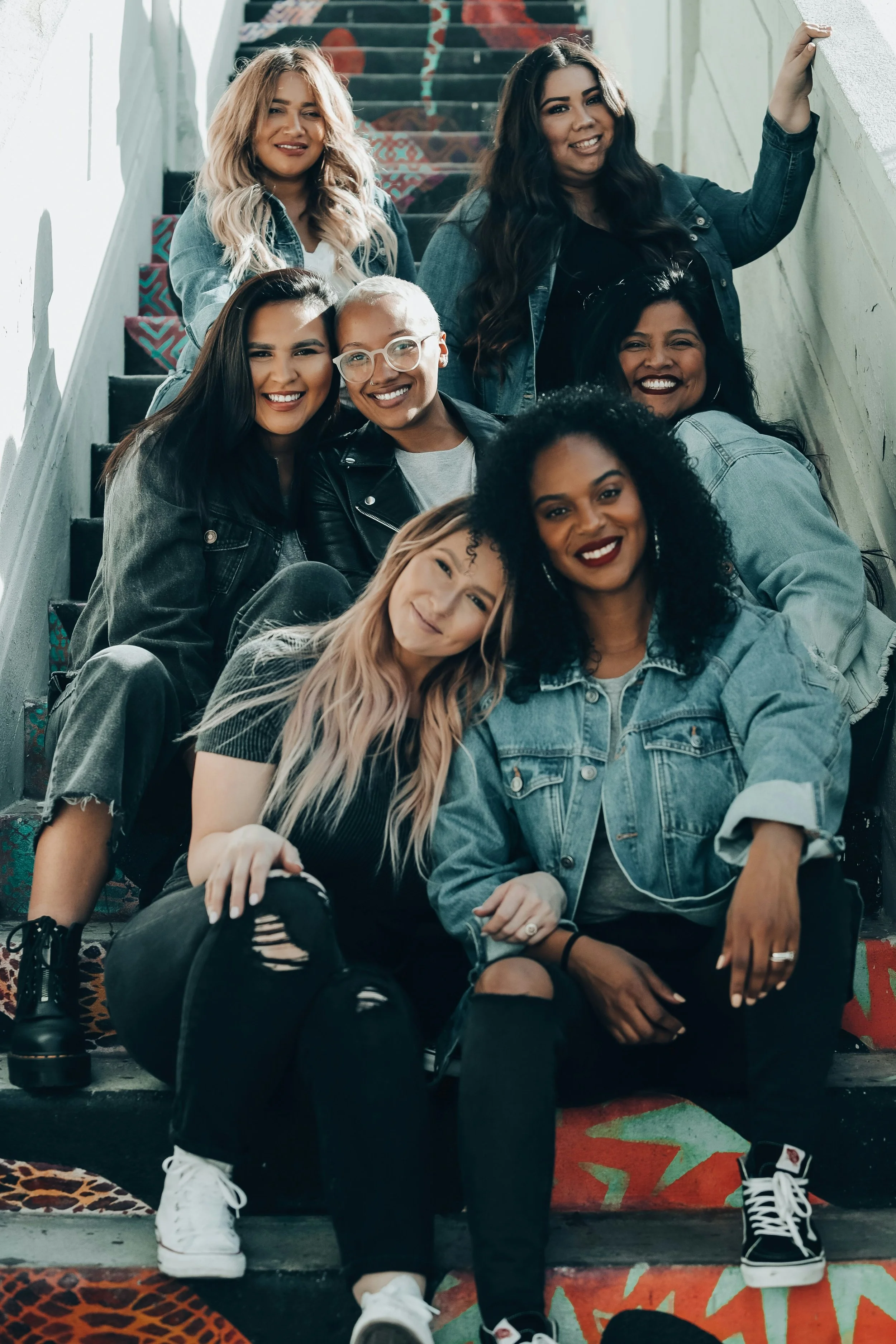
Found family, chosen family, or however one would like to call them, aren’t people who replace biological family. They aren’t fake people with fake titles. They are trustworthy, loving people outside of one’s biological family who care deeply, support one another, understand each other, and are chosen with intention. The bond is based on trust, values, experiences, and so much more. Found family members can consist of friends, coworkers, community leaders and members, or anyone of one’s choosing.
The concept of the found family has existed long before any of us came into being and is inherently non-European and non-heteronormative. According to Dr. Bahiyyah Maroon, many children of color in the past have been choosing family ever since slavery, or when their parents were killed (Healthline).
Homelessness and rejection are factors that drive queer adults and children to find found family, too. In a GLAAD article (source below, because I do research), 39% of queer adults faced rejection from their biological family, and 40% of homeless youth are LGBTQ. Of the queer youth in a 2021 study, 26% were Black LGBTQ (The Trevor Project). Those numbers are way too high and break my heart!
I know in recent times, found family is used often in the LGBTQ community, but it isn’t exclusively a queer thing! Anyone from any background can have a found family, and it doesn’t have to be a hoard of people. A found family can consist of one to two people, or it can consist of a group of people. Some people even find their families online. Every circumstance is different.
🎮 Shoutout to Twitch! You’ve created a platform where nerds and gamers can hang out and just be themselves. Maybe one day I’ll actually start streaming for fun. 🎮
When I was a teenager, my father was suffering from a terminal illness, and this made him angry and unbearable to be around the majority of the time. Lots of my aunts, uncles, and cousins, who’d visit regularly, stopped coming to the house or calling to check on him or any of us in fear they’d experience his wrath. However, if I ever ran into them in the street, they’d act as if they were so happy to see me.
“So good to see you! Come to the house any time!” they’d say.
Were they happy to see me? Maybe. Did they want me to come to the house for a visit? Maybe. They certainly weren’t coming to my house anymore, and that did not make me feel good.
Then, in my junior year of high school, I came out of the closet, and most people in my family avoided me. Aunts that I’d hang out with weekly blocked my number. Uncles ignored me in public. Cousins pointing and laughing at me as if I were a freak. All of it happened, and the ones who were willing to acknowledge my existence would usually ask me, “Are you still gay?”
Even my nuclear family was treating me poorly. My sister also asked, “Do you still like girls?” as if something in the atmosphere had changed, and I suddenly reverted to a straightened state. I confirmed that I still liked girls, and she was so disgusted. Still is, by the way. #idgaf
My father was furious when I came out. My mother was so shocked she couldn’t find her words. I was no longer the favorite or Dad’s little pudding pie. I became something much more sinister, and the two of them thought it was a great idea to straighten me out. So, they tried a few avenues, like therapy and church, which didn’t work. Eventually, they gave up and just pretended that nothing was wrong with me, and—I can only assume—imagined I was straight.
All of this had such a negative effect on my mental health, and it was tearing me to pieces. I had no one in my family, except for my brother, who was accepting of my sexual identity and my life choices. Most of them shunned me. My depression was at an all-time high, and I didn’t know how to deal with it.
Luckily for me, I did have friends in my life who stepped up and provided safety, love, and acceptance, and their families did, too. I’ve spent many holidays and vacations with my found family. They supported me in many ways, including financially, when I needed it. They were my pillars, and no matter how much time passed without seeing them, it seemed like no time had passed at all. I was able to survive high school and my crazy family with them by my side, and they were even around for my college years.
Even now in adulthood, I have very close individuals not related to me who are my lifeline. I’ve been rescued from work when people were panicking about the riots back in 2020, given a place to stay when I had nowhere to go, and fed when I just popped up (Thanks, Sarah ❤). I even have a found family member listed as an emergency contact. That’s how vital these people are. They’re really my family, and I love them!
From my findings and experience, found family is crucial and, most times, a survival function. People aren’t out there with a stamp and an ink pad claiming random people whom they feel any sort of connection to as family. It’s so much more than that! These are wonderful people you can rely on when you need help and a shoulder to cry on, people you can take that daily self-care walk with, or someone with whom you can enjoy holidays, birthdays, and special occasions. Found family is family, and don’t let anyone tell you any different.
Sources:
Healthline, “What Chosen Family Means - and How to Build Your Own, https://www.healthline.com/health/relationships/chosen-family#who-its-for
GLAAD, “The importance of found families for LGBTQ youth, especially in a crisis, https://glaad.org/importance-of-found-families-lgbtq-youth/
The Trevor Project, Homelessness and Housing Instability Among LGBTQ Youth, https://www.thetrevorproject.org/wp-content/uploads/2022/02/Trevor-Project-Homelessness-Report.pdf